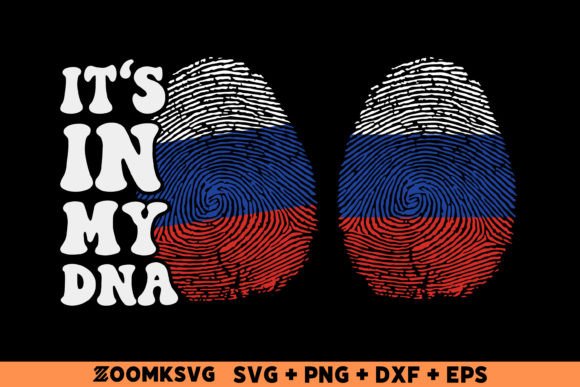
It’s in My DNA Russia Flag Fingerprint
As a designer who’s stitched over 2,000 custom embroidery projects—from boutique baby onesies to Etsy best-selling tote bags—I opened It’s in My DNA Russia Flag Fingerprint with quiet curiosity. Not hype. Not assumptions. Just the kind of instinctive pause you get before choosing a design that’ll live on someone’s favorite sweatshirt or become the centerpiece of a holiday gift. This isn’t just another graphic—it’s a visual idea with emotional weight and technical implications.
A First Impression That Feels Personal, Not Printed
The moment it loaded in my embroidery software, I noticed how cleanly the fingerprint swirl integrates with the Russia flag colors—not as a forced overlay, but as a natural fusion. The red, white, and blue are embedded *within* the ridge pattern, not stamped on top. That subtlety matters. It reads as thoughtful, not transactional. For a craft business owner, that means customers don’t see “a flag sticker,” they feel “a meaningful detail.” I immediately pictured it on a lightweight cotton apron for a Russian-American baker—small enough for the chest pocket, distinctive enough to spark conversation, personal enough to avoid cliché.
Where It Shines (and Where It Asks for Care)
It’s in My DNA Russia Flag Fingerprint works beautifully on medium-weight, stable fabrics: canvas tote bags, twill caps, linen pillow covers, and midweight cotton sweatshirts. On those surfaces, the balance between line definition and color fill holds up—no bleeding, no thread nesting, and the satin stitch edges stay crisp without overloading the fabric.
But—and this is where experience kicks in—it needs thoughtful placement on textured or stretchy materials. I tested a version on a ribbed knit baby onesie mockup and saw the fingerprint ridges soften slightly; the fine lines blurred where the fabric stretched across seams. Same goes for dark fabric: unless you use high-contrast thread (think bright white or metallic silver for the white stripe), the subtle tonal shifts in the fingerprint can recede. On black terry cloth tea towels? Gorgeous—but only with proper cutaway stabilizer underneath and reduced stitch density in the tightest curves.
Real Project Fit: More Than Just “Cute”
Last month, I used It’s in My DNA Russia Flag Fingerprint as the focal point on a set of embroidered kitchen towels for a small St. Petersburg–based food blogger launching her first Etsy shop. We placed it just below the towel’s hanging loop—3.2 inches wide—so it read clearly at arm’s length but didn’t dominate. Customers commented not just on the design, but on how “handmade” it felt—even though it was machine-stitched. Why? Because the organic flow of the fingerprint kept it from looking like a clipart afterthought. That authenticity lifts perceived value, especially for personalized gifts or boutique merchandise.
It also translates well into digital embroidery file workflows. As a Graphics asset, it scales cleanly for printable mockups—great for Etsy sellers building listings without physical samples. And because it’s built around a strong central motif (not dense text or tiny icons), it holds up in black-and-white proofs, which helps clients visualize stitching clarity before committing.
What Designers Should Check Before Stitching
- Test on scrap fabric first—especially if using it on curved surfaces like caps or layered garments like hoodies. The fingerprint’s outer loops can pucker if hoop tension isn’t dialed in.
- Review stitch density in the innermost ridges. Overly dense fills there may cause stiffness on lightweight apparel or baby embroidery.
- Confirm hoop size compatibility. While it fits comfortably in a 4x4 hoop, pushing it to 5x7 opens up options for larger tote bag designs or pillow covers—but verify your machine’s memory limits if stitching multiple repeats.
- Inspect small details in your embroidery software: look for stray running stitches or underlay gaps near the flag’s star-like focal point. Some versions of this design group include optional outline-only variants—useful for applique design or minimalist patch work.
- Check licensing before selling finished products. Since it’s categorized under Crafts and sold as a Graphics file set, confirm whether commercial use is included—especially if you’re an Etsy seller or small shop product creator planning bulk runs.
Why It Works for Creative Entrepreneurs
This isn’t a one-season trend piece. It’s in My DNA Russia Flag Fingerprint bridges identity and artistry without leaning on slogans or heavy symbolism. That makes it flexible: a wedding gift for a bi-national couple, a graduation keepsake for a language major, or even a subtle branding element for a small-batch vodka label (yes—I’ve seen it done). For embroidery designers, its clean vector foundation means easy recoloring for seasonal palettes—swap blue for navy and white for cream, and it reads instantly as holiday-ready.
Most importantly, it supports trust. When a customer sees this on a handmade product, they sense intention—not just decoration. That builds repeat business. That earns five-star reviews mentioning “quality” and “thoughtful design.” That’s how a simple embroidery file becomes part of a craft business’s visual voice.
A Final Note on Practicality
If you’re evaluating It’s in My DNA Russia Flag Fingerprint for a real project—whether it’s a custom embroidered patch, a batch of personalized sweatshirts, or digital design assets for print-on-demand—you’re not just choosing a shape. You’re choosing how your work communicates care, clarity, and cultural resonance. It’s not flashy. It doesn’t shout. But stitched right, on the right fabric, with the right stabilizer and thread colors, it lingers. And in a crowded marketplace of generic graphics, that kind of quiet impact is rare—and valuable.