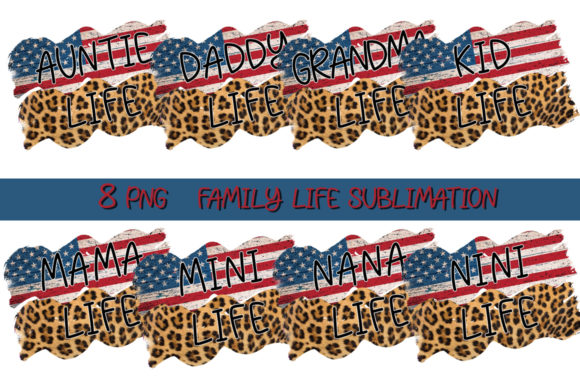
Family Life American Flag Sublimation
A Designer’s First Look: Warm, Nostalgic — But Not for Every Stitch
When I opened Family Life American Flag Sublimation for the first time, I felt that familiar tug — the one you get when a design whispers “home,” “pride,” and “everyday love” all at once. It’s not a bold, graphic flag; it’s softer, layered with subtle texture and gentle composition — think vintage linen postcards meets modern family portraiture. The central flag motif is wrapped around silhouettes or illustrated figures (likely parents and children), all rendered in warm, cohesive tones. There’s no sharp vector edge — just smooth gradients and soft shadows, which tells me immediately: this was built for sublimation or digital printing, not direct machine embroidery.
Real Project Test: Embroidering a Keepsake Baby Towel
Last week, I used Family Life American Flag Sublimation as the inspiration for a custom baby towel — meant as a shower gift for a client who loves heirloom-style nursery decor. But here’s the honest part: I didn’t stitch the design directly. Instead, I printed it on heat-transfer paper and applied it to a high-quality cotton waffle towel — then added minimal hand-stitched border details around the edges. Why? Because trying to convert this PNG into a clean, stable machine embroidery design would’ve required heavy redrawing: separating overlapping layers, simplifying shadows, rebuilding lettering, and reworking fine detail into stitch-friendly shapes. That’s not impossible — but it’s not efficient for a small-batch craft business or Etsy seller juggling ten orders.
Where It Shines (and Where It Struggles)
Family Life American Flag Sublimation works beautifully as a digital embroidery file reference — especially for printable mockups, boutique branding, or social media previews. Its 300 dpi resolution and transparent background make it ideal for layering over product photos of tote bags, sweatshirts, or pillow covers before stitching begins. As a graphics asset, it adds warmth and narrative to listings without needing stitch files.
But as a machine embroidery design, it has clear limits:
- Small hoop sizes: The composition relies on spatial balance — shrink it too much and facial features or flag stripes blur into indistinct fill stitch.
- Textured or stretchy fabric: Soft shadows and blended edges don’t translate cleanly to knits or terry cloth without heavy stabilizing and test runs.
- Dark fabric backgrounds: Since it wasn’t designed with reverse-contrast in mind, details vanish unless you manually adjust brightness or add outline stitches.
- Curved surfaces (caps, hats): No inherent contour adaptation — flat sublimation art doesn’t wrap like digitized embroidery.
- Frequent washing: Sublimated graphics hold up well, but if you’re adding embroidered accents *around* this design, thread colorfastness and stitch density must be tested separately.
What This Means for Your Craft Business
If you’re an Etsy seller or small shop owner offering personalized gifts, Family Life American Flag Sublimation is strongest when used as a finished product base — not a starting point for digitizing. Imagine it on a lightweight cotton apron for a teacher’s appreciation gift, or scaled down for a kitchen towel set sold alongside matching embroidered tea towels. Customers respond to its emotional tone: grounded, inclusive, quietly patriotic. It builds trust because it feels handmade — even when printed — thanks to its organic line work and intentional imperfection.
But be cautious about positioning it as a standalone embroidery file. Buyers expecting ready-to-stitch files will be disappointed. If you list it in your shop, clarify upfront that it’s a graphics asset best used for sublimation, screen printing, or hybrid projects — and pair it with a simple satin-stitch border or monogram to elevate the handmade presentation.
Practical Designer Notes Before You Stitch
- Test on scrap fabric first — especially if combining with embroidery. See how the printed image holds next to thread colors.
- Review stitch density if redrawing elements: avoid dense fill areas near soft shadows — they’ll flatten visual depth.
- Confirm hoop size compatibility before scaling. Don’t assume it fits standard 4x4 hoops without adjustment.
- Inspect small details like facial outlines or flag stars — they may need simplification for legibility at 3–4 inches wide.
- Try black-and-white mockups to gauge contrast on light vs. dark garments.
- Use proper stabilizer — tear-away works for stable cottons; cut-away is safer for knits or blends.
- Verify licensing before selling finished items or bundling with other design assets. This is a Crafts-category graphic — commercial use terms vary by seller.
The Bottom Line for Makers
Family Life American Flag Sublimation isn’t a plug-and-play embroidery file — and that’s okay. Its value lies in mood, storytelling, and versatility across mediums. For embroidery designers, it’s a thoughtful starting point for hybrid projects: sublimated base + delicate running stitch accents, or printed center + embroidered frame. For small business owners, it’s a reliable visual anchor for holiday embroidery collections, baby embroidery lines, or patriotic-themed boutique merchandise.
Just remember: great design judgment means knowing when *not* to stitch — and when to let the image speak for itself. Use Family Life American Flag Sublimation where its warmth lands cleanly, its resolution holds up, and its story resonates. Then let your needle do the rest — selectively, intentionally, and with confidence.