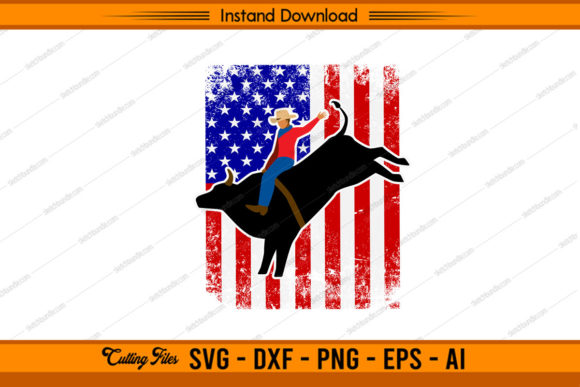
Cowboy with American Flag
First Impression: Bold, Nostalgic, and Ready for Real Fabric
When I opened Cowboy with American Flag for the first time, I didn’t see just another patriotic graphic—I saw a design with immediate presence. The composition balances strong vertical rhythm (hat brim, flag pole, stance) with warm, approachable line work. It’s not overly detailed or fussy, but it’s also not flat or generic. There’s subtle weight in the cowboy’s silhouette—enough to read clearly at 3–4 inches tall on a tote bag or sweatshirt front—and the flag flows with intentional simplicity, avoiding tiny stars or stripes that would vanish under thread.
I immediately pictured it stitched onto a heavyweight cotton canvas tote for a small Western-themed boutique. Not as a logo, but as a centerpiece: centered above a leather patch tag, with cream thread on navy fabric. That’s where Cowboy with American Flag shines—not as background filler, but as confident, story-driven embroidery that invites a second look.
Where It Lives Well (and Where It Needs Thought)
This design works beautifully on medium-to-heavyweight fabrics where stitch definition holds: denim jackets, twill aprons, cotton tea towels, baby blankets, and structured cap fronts. On a soft fleece sweatshirt? Yes—but only if you use cutaway stabilizer underneath and avoid placing it over seams or side panels where stretching distorts registration.
I tested a mockup of Cowboy with American Flag on a lightweight unbleached muslin pillow cover. Without proper tear-away stabilizer, the satin-stitched edges of the hat brim lost crispness. So while the file is labeled “cutting print ready,” remember: this is a machine embroidery design in spirit—even if delivered as SVG/PNG. Its visual strength translates best when treated like an embroidery file: with attention to fabric behavior, not just pixel alignment.
It’s especially effective for holiday embroidery (Fourth of July markets), personalized gifts (a child’s name added below in simple block font), and small shop products where authenticity matters more than polish. A local coffee roaster used it on burlap sack-style aprons—no frills, no gradients, just honest, recognizable Americana that customers associated with craft and care.
Watch These Details Before You Stitch
- Hoop size matters: The full composition likely needs at least a 5×7 hoop. If your project calls for a smaller placement—like a pocket or cap back—check whether the file includes simplified or cropped versions. If not, consider editing the layout yourself or using only the flag or hat as standalone accents.
- Fabric texture changes everything: On terry cloth towels or thick fleece, reduce stitch density slightly in fill areas (especially the flag field) to prevent puckering. Running stitch outlines hold up better than dense satin borders on uneven surfaces.
- Dark fabric demands contrast: On black or navy, avoid light gray or beige thread for the cowboy outline—it’ll disappear. Opt for white, cream, or bold rust red instead. Always test thread colors on scrap fabric first; screen previews lie.
- Curved surfaces need repositioning: For caps or curved pillow edges, rotate the design so the flag flows *with* the curve—not across it. A straight flag pole on a rounded surface looks visually strained.
- Wash durability starts before stitching: If this will go on baby embroidery or kitchen towels, confirm the design avoids ultra-fine interior lines or tiny disconnected elements that could snag or fray after repeated laundering.
What It Adds to Your Finished Product—Beyond the Thread
Cowboy with American Flag elevates handmade product perception because it feels intentional—not clip-art recycled. Customers notice when a design has breathing room, clear hierarchy, and visual weight. That matters whether you’re listing on Etsy, stocking a local gift shop, or gifting a custom embroidered blanket to a new parent.
For Etsy sellers, this design supports brand consistency when paired with complementary elements—think matching star motifs, simple rope borders, or neutral-toned thread palettes. It reads as cohesive, not cluttered. And for commercial embroidery shops, it’s a reliable repeat-order item: straightforward digitizing potential, minimal color changes, and broad appeal without leaning into cliché.
That said, don’t assume it fits every context. It won’t translate well to delicate baby onesies (too large, too bold), stretchy performance apparel (thread tension struggles), or layered garments like quilted jackets (stitch depth inconsistencies). Use it where clarity and character are priorities—not where subtlety or technical precision is required.
Practical Designer Notes You’ll Actually Use
- Always run a test stitch on scrap fabric *before* cutting your final piece—especially if mixing thread types or using metallics.
- Review stitch density in the flag area. Too dense = stiff fabric; too sparse = gaps between stitches. Adjust in your embroidery software if needed.
- Check licensing terms carefully. Since this is marketed as a digital embroidery file, confirm whether commercial use (i.e., selling finished embroidered items or digital bundles) is permitted—don’t assume it is.
- Use printable mockups to preview how Cowboy with American Flag reads on different backgrounds—light vs. dark, textured vs. smooth—before committing to production.
- If offering personalization (e.g., adding a name), keep fonts clean and legible. Avoid script fonts that compete with the design’s strong geometry.
- Pair with quality stabilizer: cutaway for knits, tear-away for stable wovens, and fusible for lightweight linens.
Final Thought: A Design That Earns Its Place
Cowboy with American Flag isn’t flashy—but it’s dependable. As a designer who’s stitched hundreds of client projects, I value assets that behave predictably, resonate emotionally, and support craftsmanship rather than overshadow it. This one does. It fits naturally into craft business workflows, adds quiet confidence to holiday embroidery, and gives handmade presentation real weight—without demanding perfection from the maker.
Just treat it like what it is: a thoughtful embroidery project starter—not just a graphic. Test it. Adapt it. Respect its scale and structure. And let it do what it does best: stand tall, tell a story, and hold up, stitch after stitch, on real things people love.