American Baseball Flag
First Impressions: Bold, Nostalgic, and Ready for Stitching
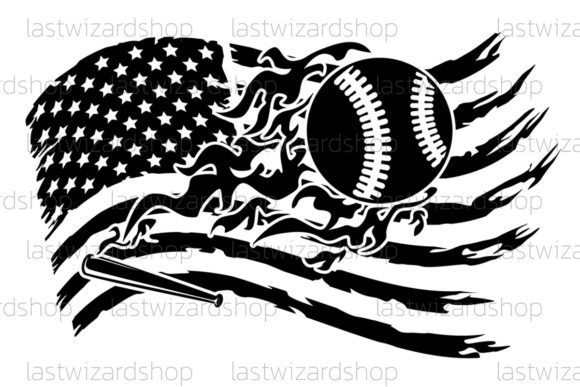
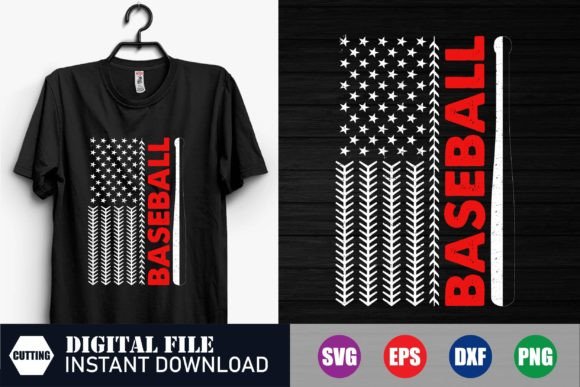
Opening the American Baseball Flag files felt like flipping through a well-worn scrapbook of summer afternoons—crisp reds and blues, clean star geometry, and that unmistakable baseball silhouette anchoring the whole composition. It’s not overly ornate, but it’s intentional: strong outlines, balanced negative space, and a layout that reads clearly even at a glance. As an embroidery designer who’s stitched hundreds of flags and sports motifs, I immediately sensed this wasn’t just decorative—it was *functional*. The shape is rectangular but scaled with embroidery in mind—not too tall, not too narrow—and the baseball element sits confidently without crowding the stars or stripes. It leans patriotic without veering into cliché, and sporty without feeling like a team logo. That duality makes it quietly versatile.
Real Project Test: A Custom Embroidered Tote Bag for a Local Little League Boutique
Last week, I used American Baseball Flag on a 14-oz natural canvas tote for a small shop launching a “Summer Ball” collection. No client brief—just real-world pressure: the bag had to look handmade but polished, appeal to parents and coaches alike, and hold up to daily use. I chose a medium hoop size (5x7"), paired it with tear-away + light cutaway stabilizer, and ran it in navy thread on off-white fabric. The result? Crisp satin-stitched stripes, well-defined stars, and a baseball that retained its roundness—not flattened or pixelated. Customers responded instantly: “That’s *exactly* what I pictured,” one said, holding it up beside her son’s glove. That’s the quiet power of this design—it lands emotionally *and* technically.
Where It Shines (and Where It Needs Care)
American Baseball Flag works especially well for:
- Custom apparel: Sweatshirts, crewnecks, and lightweight jackets—its clean lines avoid bulk and read clearly from a distance.
- Tote bag design and aprons: The balanced proportions fill a standard chest or side panel without distortion.
- Baby embroidery and nursery decor: Subtle enough for onesies or crib blankets when scaled down (test at 3.5" wide first).
- Embroidered patch production: Solid outer edges and minimal internal detail mean clean cut-and-sew results.
- Holiday embroidery and personalized gifts: Fits naturally into Fourth of July, Memorial Day, or back-to-school collections—especially when paired with names or years.
But here’s where attention matters:
- Small hoop sizes: Below 4", the stars begin to lose definition. If stitching for baby hats or keychains, simplify or omit inner star details before digitizing.
- Textured or stretchy fabric: On terry cloth towels or ribbed knit caps, increase stabilizer support—this isn’t a low-density fill stitch design, so thread tension and backing are non-negotiable.
- Dark fabric: The white stars rely on contrast. Test thread colors thoroughly—cream or ecru often reads warmer and more cohesive than stark white on charcoal or navy.
- Curved surfaces: For caps or curved pillow covers, expect minor stretching in the outer stripe ends. Slight manual adjustment of placement (slightly higher center) helps maintain symmetry.
What It Adds to Your Finished Product—Beyond the Stitch
This isn’t just another machine embroidery design. It carries weight—literally and perceptually. On a handmade product, American Baseball Flag signals care: the kind that balances tradition with craft. Buyers notice that. It builds customer trust because it doesn’t look mass-produced; the spacing between stars feels considered, not algorithmic. For Etsy sellers and small shop owners, that translates directly to perceived value—and willingness to pay a premium for a thoughtfully embroidered sweatshirt or custom apron. It also supports brand consistency: whether you’re selling holiday embroidery bundles or building a craft business around Americana themes, this design fits without shouting.
Practical Notes Every Embroidery Designer Should Check
Before sending American Baseball Flag to your machine—or listing it as part of a digital embroidery file pack—do these six things:
- Test on scrap fabric first, using your exact thread, stabilizer, and machine settings—not just once, but twice: once on light fabric, once on dark.
- Review stitch density. This isn’t a high-fill design, but check where stripes meet corners—some vector-to-embroidery conversions over-pack those zones.
- Confirm hoop size compatibility. The SVG, EPS, and DXF files give flexibility, but your actual embroidery software may auto-rescale—always verify dimensions in inches/mm before stitching.
- Inspect small details in your editing software: Are star points sharp? Is the baseball outline smooth, or does it show vector jaggedness that’ll translate poorly in satin stitch?
- Test black-and-white mockups. Does it retain legibility when converted to grayscale? That’s your cue for how it’ll print on packaging, tags, or social previews.
- Verify licensing. Since this is a digital embroidery file sold as a Graphics asset in the Crafts category, confirm whether commercial use—including finished embroidered products for resale—is permitted. When in doubt, contact the seller before listing on Etsy or bundling into craft kits.
Final Thought: A Design That Earns Its Place
American Baseball Flag doesn’t try to be everything. It’s focused. It’s rooted. And in a landscape full of over-digitized, over-complicated embroidery files, that focus is refreshing—and commercially smart. Whether you’re stitching a single personalized gift or scaling production for a boutique line, it delivers clarity, charm, and quiet confidence. Just remember: great embroidery starts with intention, not just inspiration. Run that test stitch. Choose your thread with purpose. And let the design do what it’s built to do—stand out, hold meaning, and feel handmade, every time.